
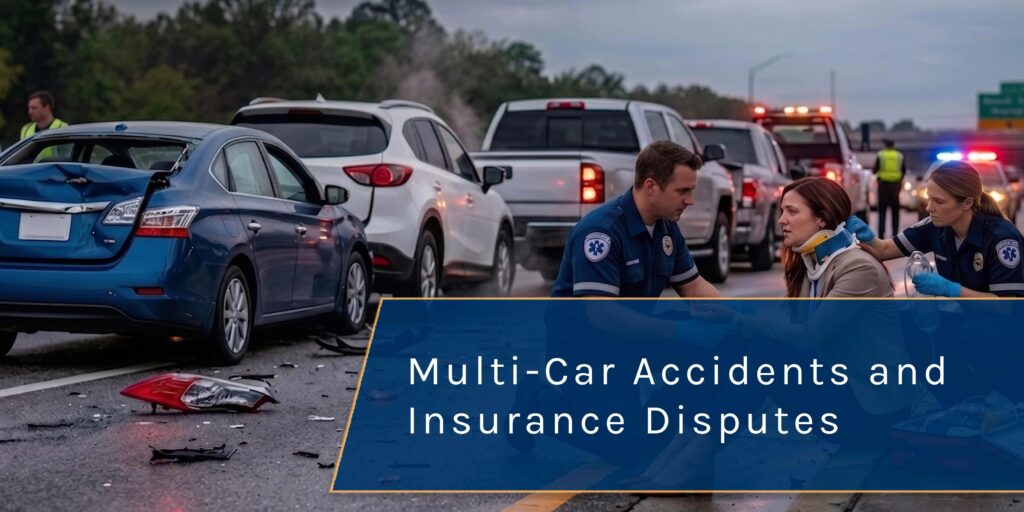
Multi-car accidents in Florida involve three or more vehicles in a connected series of impacts. Often called chain-reaction crashes or pile-ups, these collisions can quickly become complicated when a single impact triggers additional crashes involving several drivers. Because vehicles may be struck more than once or pushed into oncoming traffic, these accidents often result in serious injuries and extensive damage.
With each additional vehicle comes another insurance policy, adjuster, and version of what happened. Insurers may dispute the order of impact, shift blame to other drivers, or argue over which collision caused each injury. As a result, disagreements over fault, coverage, and compensation often begin almost immediately. This is why hiring a Florida car accident attorney is critical after a serious multi-vehicle crash.
Table of Contents
Common Causes Of Multi-Car Accidents In Florida On Highways And City Roads
Most multi-car accidents in Florida start with one unsafe choice that triggers a chain reaction. However, roadway design and weather often amplify the damage.
Common driver-related causes include:
- Tailgating and failing to keep a safe following distance
- Distracted driving, including texting and navigation use
- Impaired driving from alcohol, drugs, or certain medications
- Aggressive driving, speeding, and rapid lane weaving
- Sudden stops, especially in heavy traffic or near intersections
Weather can also contribute to pile-ups. Heavy rain reduces traction, while fog, glare, and low visibility can hide brake lights and stopped traffic.
Unsafe merging and lane changes are another common cause, especially near highway interchanges. One sudden move can force drivers across several lanes to brake, triggering a chain reaction.
What To Do After Multi-Car Accidents In Florida
Multi-car accidents in Florida can become confusing almost immediately, so it helps to know what steps to take after the crash:
- Call 911 and request medical help. Ask for law enforcement as well. Move out of traffic only if you can do so safely; otherwise, stay where you are and follow the dispatcher’s instructions.
- Get medical care promptly, even if you feel fine. Adrenaline can mask pain and other symptoms, and early treatment helps document how the crash affected you.
- Collect witness information. Ask for names and contact details before people leave the scene, since the police report may not include every witness.
- Take photos and videos if it is safe. Document vehicle positions, damage, debris, skid marks, road hazards, weather conditions, and lighting.
- Avoid discussing fault. Stick to the facts and do not speculate about what caused the crash. Insurance adjusters may later use casual comments to dispute liability.
- Ask how to obtain the crash report. Write down the case number, responding agency, and officer’s name. Many reports can later be requested through official channels, including the Florida Crash Portal.
A Florida car accident lawyer can help investigate the chain of events, deal with multiple insurers, and protect your right to compensation.
What Is The Statute of Limitations for a Florida Multi-Car Accident?
Florida law generally gives you two years from the crash date to file a negligence-based personal injury lawsuit.
Waiting too long can weaken your case even before the filing deadline arrives. Surveillance footage may be erased, vehicles may be repaired or totaled, and witnesses may become harder to locate. Contacting a Florida car accident lawyer early can help preserve evidence and ensure your claim is filed on time.
How Fault Gets Determined In Multi-Car Accidents In Florida
Fault analysis in multi-car accidents in Florida rarely stays simple. In a basic rear-end crash, the trailing driver often bears responsibility. However, chain reactions can change that assumption.
Investigators and insurers look at the full sequence:
- Who caused the first impact
- Who followed too closely given conditions
- Who changed lanes without enough clearance
- Who failed to brake in time, and why
- Whether a disabled vehicle or road hazard played a role
The driver who starts a chain-reaction crash may be responsible for most of the damage. For example, a driver who is hit from behind and pushed into another vehicle may have little or no fault.
Florida also uses modified comparative negligence. Your compensation may be reduced if you share responsibility for the crash. If you are found more than 50% at fault, you generally cannot recover damages from the other drivers.
Here are common real-world fault patterns:
- Highway chain-reaction rear-end crash: One driver tailgates; multiple impacts follow. Still, lane changes and sudden stops may shift fault allocations.
- Intersection multi-vehicle crash: One driver runs a light; secondary impacts happen when cars strike others in adjacent lanes.
- Merging crash near an on-ramp: A driver forces entry; traffic brakes hard; rear-end impacts stack up behind the merge point.
Evidence That Strengthens Multi-Car Accidents In Florida Claims
Evidence is especially important in multi-car accidents because drivers and insurers may give conflicting accounts of what happened. The most useful evidence helps show the order of impacts and which driver caused the chain reaction.
Police reports can identify the drivers, witnesses, and basic crash sequence. Review the report for mistakes and address any inaccurate information as early as possible.
Photos and videos may provide even stronger proof. Save dashcam footage immediately, and look for nearby business, traffic, or residential cameras before the recordings are erased.
Vehicle damage, debris, paint transfer, and onboard crash data can also help show how the collision happened. Medical records are equally important because they document your injuries and connect them to the accident.
Insurance Claims After Multi-Car Accidents In Florida
Insurance issues often become more complicated when you are injured in a multi-car accident. Several policies may apply, and each insurance company may try to limit what it pays or shift responsibility to someone else.
Common types of coverage include:
- PIP coverage: Your own PIP coverage may help pay initial medical expenses regardless of fault. However, Florida PIP generally provides only up to $10,000 in benefits, which may cover only a small portion of the costs after a serious crash.
- Bodily injury coverage: The at-fault driver’s bodily injury coverage may help pay for medical expenses, lost income, pain and suffering, and other losses. However, some drivers carry low limits or no bodily injury coverage at all.
- UM/UIM coverage: Uninsured or underinsured motorist coverage may help when the responsible driver has no insurance or not enough coverage to fully compensate you.
- Property damage coverage: This may help pay for repairs or the value of your vehicle, depending on which driver caused the crash and what coverage is available.
Disputes often arise over which impact caused your injuries and which insurer should pay. One company may accept responsibility for the first collision but deny liability for the later impacts. Another may argue that your injuries came from a different vehicle or were not caused by the crash.
Notify your insurer promptly and follow your policy requirements. When speaking with adjusters, stick to the facts and avoid guessing about speed, distance, or fault. You should also be cautious about giving a recorded statement to another driver’s insurer before getting legal advice.
Damages You Can Seek After a Florida Car Accident
Multi-car accidents in Florida can cause losses that extend far beyond a repair estimate. Your damages may include economic and non-economic categories.
Economic damages can include:
- Emergency care, hospital bills, and follow-up treatment
- Imaging, physical therapy, rehab, and prescriptions
- Future medical care
- Out-of-pocket medical expenses and mileage
- Lost wages and used leave time
- Reduced earning capacity
Non-economic damages can include pain and suffering, mental anguish, and loss of enjoyment of life. However, in many cases you must meet Florida’s serious injury threshold to pursue certain non-economic damages beyond no-fault benefits. That issue turns on medical evidence, diagnosis, and permanence.
How A Florida Car Accident Attorney Helps With Multi-Car Accidents In Florida
A Florida car accident lawyer can take the pressure off you while building a stronger personal injury claim. Your attorney can:
- Identify every responsible driver and all available insurance coverage.
- Preserve crash reports, video footage, vehicle data, and other evidence before it disappears.
- Handle calls, questions, and recorded-statement requests from multiple insurers.
- Bring in accident, medical, or financial experts when needed.
- Push back when insurance companies try to shift blame or minimize your injuries.
This can make a major difference in a multi-car accident claim, where several insurers may be working to reduce what they owe you.
FAQs (Frequently Asked Questions)
What are the common causes of multi-car accidents on Florida highways and city roads?
Common causes include tailgating, distracted or impaired driving, speeding, sudden stops, poor weather or visibility, and unsafe merging or lane changes near intersections and highway ramps.
What steps should I take immediately after a multi-car accident in Florida?
Call 911 and request medical help and law enforcement. Move out of traffic only if it is safe, and seek medical care promptly even if you feel fine. Collect witness information, take photos and videos of the scene, avoid discussing fault, and ask the officer how to obtain the crash report.
What medical and legal deadlines apply after a car accident in Florida?
Florida generally gives you two years from the crash date to file a personal injury lawsuit. Acting early also helps preserve evidence before videos are erased, vehicles are repaired, or witnesses become harder to locate.
How is fault determined in multi-car chain-reaction accidents in Florida?
Fault may depend on who caused the first impact, followed too closely, changed lanes unsafely, or failed to brake in time. A driver pushed into another vehicle may have little or no fault. Under Florida’s modified comparative negligence rule, your compensation can be reduced by your share of fault, and you generally cannot recover if you are more than 50% responsible.
What are some common real-world fault patterns in multi-car accidents in Florida?
Common fault patterns include rear-end chain reactions caused by tailgating, intersection crashes triggered by a driver running a red light, and merging accidents where one vehicle forces others to brake suddenly.
Protect Your Claim When Insurers Point Fingers
After a multi-car accident, you may face several insurance companies trying to shift blame, dispute your injuries, or reduce what they pay. You deserve clear answers about who may be responsible, which policies may apply, and what your claim may be worth.
At Personal Injury Attorneys McQuaid & Douglas, we can help you understand your options, protect important evidence, and deal with the insurance companies while you focus on your recovery.
Contact us today for a free consultation and learn how you can pursue the compensation you deserve.