
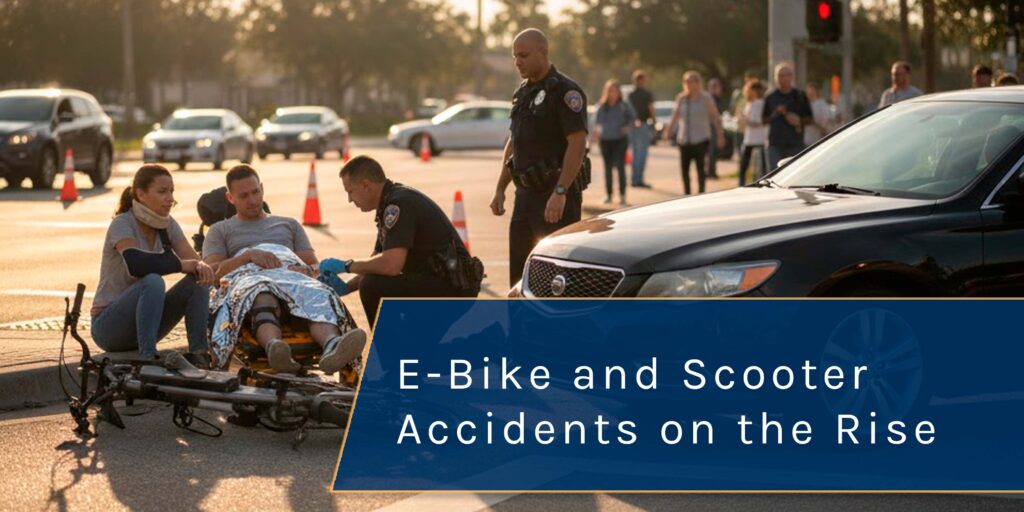
E-bikes and e-scooters are no longer a novelty in the Tampa Bay Area. But with their rapid rise in popularity, has come a clear and troubling trend. E-bike and scooter accidents in Tampa Bay are increasing, and local hospitals and law enforcement agencies are sounding the alarm. In recent years, emergency rooms across Hillsborough and Pinellas counties have reported a steady climb in electric bike and scooter injuries, including several fatal crashes involving riders. In Pinellas County alone, officials have linked multiple recent traffic deaths to e-bikes, underscoring how quickly these devices have become a serious roadway safety concern.
You now see e-bikes and scooters on waterfront trails, downtown streets, and neighborhood connectors throughout the region. As a result, more riders are sharing space with cars, trucks, pedestrians, and tourists who may not anticipate faster electric traffic. When overall exposure increases, crash risk rises too.
Furthermore, injuries from these crashes are often more severe than many riders expect. Higher speeds combined with limited physical protection mean that even a short ride can lead to serious harm when something goes wrong.
Table of Contents
What Is Driving Tampa Bay E-Bike and Scooter Accidents
Several forces push daily ridership up; therefore, crash numbers rise as well.
First, commuter-focused e-bikes make longer rides easier. Class 2 e-bike options, which can provide throttle-assisted speed, also attract riders who may have limited cycling experience. Meanwhile, rental fleets place scooters in high traffic areas, so short trips multiply quickly.
Second, the Tampa Bay region including Pinellas County contains dense corridors with mixed traffic. St. Petersburg and Clearwater include downtown grids, beach access routes, and frequent crossings. Tampa adds its own pressure points with heavy commuter traffic, complex downtown intersections, and high-speed arterial roads feeding into urban bike routes. Tourists often drive unfamiliar roads, and riders often travel unfamiliar routes. That combination increases conflict points.
Third, infrastructure still varies block by block. You might get a protected lane for a short stretch. Then it disappears at an intersection or merges into faster traffic. Consequently, riders and drivers both make last second decisions.
What Happens Immediately After a Tampa Bay E-Bike or Scooter Accident
After Tampa Bay e-bike and scooter accidents, the first priority is medical care. Because these crashes often involve higher speeds than bicycles and direct impacts, the risk of serious injury is significantly higher than many riders expect.
- A typical response begins with a 911 call and on-scene assessment by paramedics.
- First responders check airway, breathing, circulation, visible bleeding, and signs of head or spine injury.
- Emergency rooms triage patients based on symptoms and how the crash occurred.
- Imaging is frequently ordered early and may include X-rays, head CT scans, and CT imaging of the chest or abdomen.
- Doctors in the Tampa Bay area report seeing traumatic brain injuries, internal bleeding, chest trauma, and organ injuries involving the lungs, liver, or spleen.
In St. Petersburg, many injured riders are evaluated through emergency pathways at Orlando Health Bayfront Hospital, where physicians have warned that these injuries can be life-threatening if they are not identified quickly.
Timing matters because early detection of brain and spinal injuries can prevent more serious outcomes. If a rider hits their head, loses consciousness, feels dizzy, vomits, or develops worsening headaches, immediate medical care is critical. The same is true for numbness, weakness, or severe back pain, which may signal spinal trauma.
Local Crash Patterns in the Tampa Bay Area
Tampa Bay area e-bike and scooter accidents often follow predictable patterns. Understanding those patterns helps explain where liability disputes usually begin.
Common crash scenarios include:
- Right hook collisions: a driver passes a rider and then turns right across the rider’s path.
- Dooring accidents: a parked driver opens a door into a rider’s lane.
- Left turn conflicts: a vehicle turns across an oncoming rider or a rider turns without clear signaling.
- Rear end impacts: crashes that occur near intersections, crosswalks, and traffic lights.
Visibility issues increase crash risk. Low light conditions, rain, glare from wet pavement, and tinted windows can all reduce detection. Dark clothing or weak lights make riders harder to see, leading drivers to claim they did not notice the rider even when the rider had the right of way.
Traffic conditions also matter. Riders often share lanes with faster, heavier vehicles, leaving little margin for error. In those situations, even a brief misjudgment can result in a high-force collision.
Road Rules Riders Often Miss
Many Tampa Bay e-bike and scooter accidents stem from basic rule confusion. Local police and safety officials frequently cite lack of rider awareness, especially because rules can vary by city and location.
Riders often overlook the following:
- Where you can ride: Sidewalk rules vary by municipality. In places like St. Petersburg and across Pinellas County, sidewalk riding may be limited in business districts or require yielding to pedestrians. Sidewalks also create driveway and intersection conflicts drivers may not expect.
- Yielding and crossings: Pedestrian areas require lower speeds and extra caution. Riders must yield where required and avoid sudden moves from sidewalks or trails into traffic.
- Signaling and positioning: Clear hand signals and consistent lane positioning reduce risk. Shifting unpredictably between sidewalks, shoulders, and travel lanes increases crash likelihood.
- Stopping at intersections: Stop signs and traffic signals apply to riders. Rolling through intersections or slipping past traffic can trigger left turn or right hook collisions.
Rental riders face additional challenges. App users may not know local rules or have experience on higher speed devices, leading to poor braking judgment and unstable turns. Furthermore, the local ordinance landscape for electric micromobility is frequently shifting to limit the places where you can safely ride.
Safety Steps That Reduce Risk Today
You cannot control traffic; still, you can reduce risk with consistent habits. This short checklist helps prevent Tampa Bay e-bike and scooter accidents, and it also helps if you later need to prove you rode responsibly.
Gear and visibility checklist:
- Wear a properly fitted helmet.
- Use bright clothing plus reflective gear.
- Turn on a working front light and rear light every ride, not only at night.
- Check brakes and tire pressure before you roll.
Riding habits that matter:
- Scan driveways and parking lot exits; cars often pull out without seeing you.
- Slow down at intersections, even with a green light.
- Avoid surprise sidewalk exits into crosswalks or travel lanes.
- Watch for opening doors near parallel parked cars.
- Leave space from curbs and gutters so you can maneuver around debris.
If you ride with traffic, act predictable. If you ride near pedestrians, slow down. That simple approach reduces conflict points.
Insurance Coverage for Tampa Bay E-Bike and Scooter Accidents
Insurance after Tampa Bay e-bike and scooter accidents depends on fault, the vehicles involved, and which policies are available. A Florida e-bike and scooter accident attorney is indispensable for identifying applicable coverage and addressing gaps. Differing insurance coverages may include:
- Auto liability: When a car hits a rider, the driver’s bodily injury liability insurance is usually the primary source of compensation. Insurers often dispute fault or minimize injuries.
- MedPay: Medical Payments coverage may help pay early medical bills regardless of fault, if the rider has an applicable policy.
- UM/UIM: Uninsured or underinsured motorist coverage under your own auto policy may apply when the at-fault driver has little or no insurance. These claims can cover medical expenses, lost income, and pain and suffering.
- Homeowners or renters: These policies may apply in limited non-vehicle situations, such as incidents involving minors, but exclusions are common.
- Rental scooters and equipment issues: App based companies may offer limited liability coverage with strict reporting requirements. Mechanical defect claims are uncommon due to rider waivers, but preserving the device and app data is still important.
The bottom line: Florida follows a modified comparative fault rule. If a rider is more than 50 percent at fault, recovery is barred. As a result, insurers routinely shift blame to riders. A Florida e-bike and scooter accident lawyer can identify all available coverage, preserve evidence, and protect your e-bike or scooter accident claim.
FAQs (Frequently Asked Questions)
Why are e-bike and e-scooter accidents rising in the Tampa Bay Area?
E-bike and e-scooter accidents are increasing in Tampa Bay as ridership grows. Factors include commuter-friendly electric bikes, widespread scooter rentals in busy areas, mixed traffic with pedestrians and vehicles, and inconsistent infrastructure that forces sudden decisions by riders and drivers.
What types of injuries result from Tampa Bay e-bike and e-scooter crashes?
These crashes often cause motorcycle-type injuries, including traumatic brain injury, internal bleeding, and chest or organ damage, due to high speeds and limited rider protection.
What emergency care should be expected after an e-bike or e-scooter accident in Tampa Bay?
After a crash, paramedics assess vital functions and possible head or spine injuries. Emergency rooms often order early imaging due to the high-speed impact, and prompt evaluation is critical to prevent serious complications.
What are common crash patterns involving e-bikes and e-scooters in Tampa Bay?
Common crash scenarios include right hook turns, dooring incidents, left turn conflicts, rear end collisions in congested traffic, and visibility-related crashes caused by low light or poor lighting.
What insurance applies after a Tampa Bay e-bike or scooter accident?
Insurance coverage depends on fault and the policies involved. In some cases, your own auto policy, including UM or UIM coverage, may apply. A Florida e-bike and scooter accident lawyer can help identify coverage gaps and protect your claim.
Talk to a Skilled Florida E-Bike and Scooter Accident Lawyer Today
Tampa Bay e-bike and scooter accidents can turn into complex claims quickly. Evidence disappears, witnesses forget details, and app data can become harder to retrieve. That is why early legal help matters.
At Personal Injury Attorneys McQuaid & Douglas, we can help you collect and preserve evidence, communicate with insurers, and analyze liability under Florida law. Our firm can also help secure key records, including surveillance video, vehicle data, medical documentation, and app-based trip history. If fault becomes disputed, our team can build a clear narrative supported by proof.
If you or a loved one has suffered injuries in the Tampa Bay area from an e-bike or e-scooter accident, contact us today and request a free consultation.