
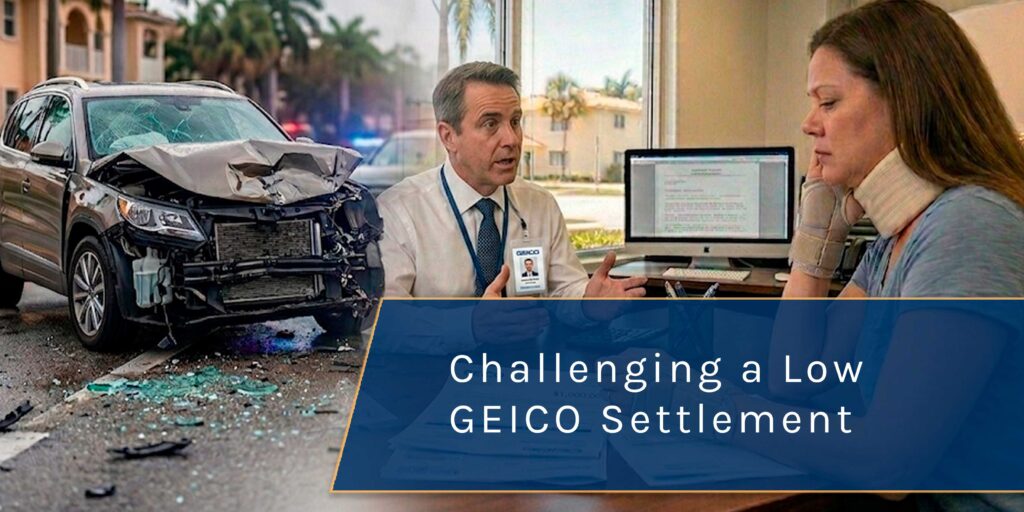
You are driving on I-275 through Tampa Bay or heading across the Howard Frankland Bridge toward St. Petersburg. Traffic slows, and a driver rear-ends you. You feel “fine” at the scene, but your neck tightens that night. Then the first offer arrives fast. In many cases, it’s a GEICO low settlement in Florida, showing up within days of the crash.
That speed can feel helpful. However, it often signals something else. GEICO may be aiming for a quick, low-cost resolution before your full diagnosis appears in your medical records.
In 2026, many Florida claimants report tougher claim handling. Adjusters carry heavy caseloads, and insurers apply stricter cost controls. As a result, GEICO often takes a more aggressive negotiation approach from the first call. If you accept that early anchor and do not consult a Florida car accident attorney, it can be difficult to recover full value later.
Table of Contents
Why You Got a Low GEICO Settlement in Florida
A GEICO adjuster has a job to do. That job includes investigating the loss, limiting exposure, and protecting policy limits. So, the adjuster starts from a conservative number and asks you to prove every dollar.
In practice, claim valuation turns on three things: medical documentation, causation, and damages. If your records do not clearly connect the crash to your symptoms, the adjuster discounts the claim. If your treatment looks inconsistent, the adjuster argues you healed or that something else caused the pain.
Common undervaluation triggers include gaps in care, delayed treatment, and incomplete records. Even small issues matter. For example, missing follow-ups can look like you did not need care. Likewise, waiting weeks to see a doctor makes causation easier to attack.
Fast Money, Big Strings Attached
GEICO often calls early with a quick offer. The pitch sounds reasonable, especially when bills start arriving. Still, early offers frequently arrive before imaging, specialist referrals, or a clear prognosis.
The biggest risk is the release. Once you sign, you can waive future medical expenses and pain and suffering damages tied to the crash. That includes care you did not expect, such as injections or surgery.
Timing drives value. Therefore, wait until your doctors document diagnosis, restrictions, and future care needs. If you do not know your outcome, you cannot price your case.
Medical Bills GEICO Questions or Ignores
A low GEICO settlement in Florida often follows a “medical necessity” fight. GEICO may question whether treatment relates to the wreck, or whether you needed that much care.
Disputed care often includes:
- Chiropractic care
- Physical therapy
- Pain management visits
- Epidural steroid injections
- Diagnostic imaging, including MRI and CT scans
Adjusters challenge causation, frequency, and duration. They also argue you treated too long, treated too often, or picked the “wrong” provider. In response, you need clean records and clear doctor narratives that explain why each service mattered. For instance, certain treatments like epidural steroid injections can be crucial for recovery but may be contested by GEICO.
Tactics GEICO Adjusters Use and How They Affect Value
GEICO does not need dramatic tactics to reduce value. In many cases, a low GEICO settlement in Florida relies on pressure points.
First, GEICO may request a recorded statement. Second, it may slow-walk document review. Third, it may shift blame to you or a third party. Finally, it may focus on selective documentation, while ignoring supportive records.
Each move affects value. A recorded statement can lock you into details before you know your injuries. Delays can push you toward quick cash. Blame arguments can reduce your percentage of fault, which directly reduces money. Selective documentation can hide the true impact of your pain.
Recorded Statements With GEICO: What to Know Before You Talk
GEICO often requests recorded statements early to lock in your account and challenge later updates. A misstatement can be used against you. In many third-party claims, you are not required to give one. Even under your own policy, you control timing and scope. Avoid discussing fault, long-term injuries, or estimates. If you feel pressured, slow things down. Request questions in writing and speak with a Florida car accident lawyer before responding.
Damages You Must Document to Raise the GEICO Offer
If you get a low GEICO settlement in Florida, you and your car accident attorney fix it with proof. Specifically, you document damages in clear buckets, then you tie each bucket to evidence.
Economic damages include medical bills, future medical costs, lost income, reduced earning capacity, and out-of-pocket expenses. Non-economic damages include pain and suffering, mental anguish, inconvenience, and loss of enjoyment of life.
GEICO may focus only on bills and car repair costs. Juries often do more. That gap explains why insurers use different pain and suffering calculators than juries do. Accordingly, your documentation must show the human impact, not just the invoices.
Evidence Checklist That Moves a Low GEICO Settlement in Florida
Use this checklist to build leverage and push back on your low GEICO settlement in Florida.
Accident proof
- Police report and crash exchange
- Photos of vehicles, debris, road conditions, and visible injuries
- Video from dashcams, nearby businesses, or traffic cameras
- Witness names, numbers, and short written statements
- Tow receipts, repair estimates, and total loss valuations
Injury proof
- ER and urgent care records
- Primary care and specialist notes
- MRI, CT, and X-ray reports
- Physical therapy evaluations and progress notes
- Clear doctor narratives on diagnosis, causation, restrictions, and prognosis
Money proof
- Itemized medical bills, not just summaries
- Pharmacy receipts and medical device receipts
- Mileage logs to appointments and parking costs
- Wage verification, pay stubs, and a letter from your employer
- Documentation of missed overtime, commissions, or side income
Impact proof
- A pain journal with dates, symptoms, and functional limits
- Photos showing braces, bruising, or limited mobility
- Family or friend observations about sleep, mood, and daily limitations
- Employer notes on performance limits and missed duties
This evidence changes the conversation. It also makes it harder for GEICO to ignore treatment or minimize your pain.
When a Lawsuit Becomes the Leverage
With a low GEICO settlement in Florida sometimes negotiations stall even with strong proof. Liability disputes may persist, or GEICO may refuse to move off a low number. In other cases, your damages exceed the offer by a wide margin. That is often the pivot point.
With the support of a Florida car accident lawyer, filing a lawsuit changes the playing field. Discovery starts. Depositions happen. GEICO must answer written questions, produce documents, and take the case seriously. As a result, the carrier often reassesses value when trial risk becomes real.
Bad Faith Insurance Claims and Warning Signs
Bad faith, a term that signifies the insurer’s failure to act fairly and honestly under the policy, can significantly impact your claim. In plain terms, it means the insurer is prioritizing its interests over the insured’s or claimant’s rights when the facts require better conduct. This is where understanding bad faith insurance claims becomes crucial.
Warning signs of bad faith can include:
- Unreasonable delays in investigating or evaluating the claim
- Lowballing despite clear liability and clear damages
- Ignoring documented injuries, restrictions, or future care needs
- Failing to communicate material decisions in a timely way
Bad faith claims involve technical rules and strict proof. As a result, a Florida car accident lawyer is crucial to have success.
Mistakes That Reduce Your GEICO Claim in Florida
Small mistakes can cost real money. Fortunately, with the help of a car accident lawyer near you in Florida you can reduce these errors to none at all.
First, do not list injuries casually. Your pain and limitations must match your medical records. If you tell an adjuster “I’m okay,” you create a credibility problem later.
Second, do not skip follow-ups. Gaps in treatment invite causation arguments. They also let GEICO claim you recovered.
Third, prepare for any independent medical examination, also called an IME. The IME exists to evaluate your condition for the defense side, not to treat you. So, understand the purpose, review your history, and stay consistent.
Fourth, do not settle before future care is known. Future medical expenses often drive value, especially with radiculopathy, injections, or long-term therapy. If your doctor expects ongoing care, you need that in writing.
Finally, do not miss deadlines. Florida law can bar your claim if you wait too long. Even before that, delay can weaken evidence and reduce leverage. This is why it is important to consult early on with an experienced Florida car accident attorney to get the best settlement you can.
FAQs (Frequently Asked Questions)
Why do GEICO settlements often start low after a car accident?
An adjuster often starts with a low GEICO offer in Florida to limit exposure. They look for strong medical records, clear causation, and documented damages. Gaps in care or delayed treatment can reduce your initial offer.
Why should I be cautious about accepting an early GEICO settlement offer?
Early offers often come before imaging, referrals, or a clear prognosis. Accepting too soon can waive future medical costs and pain and suffering, including unexpected treatments. Timing is critical to value your claim properly.
How does GEICO challenge medical bills during settlement negotiations?
GEICO often challenges the necessity of care like PT, chiropractic, injections, and imaging. They question causation and treatment scope. Clear doctor reports explaining medical need help counter this.
What tactics does GEICO use that can affect the value of my settlement?
GEICO may seek early recorded statements, delay reviews, shift blame, and focus on selective evidence. Each tactic aims to lower your claim value.
How can I improve my chances of getting a higher GEICO settlement in Florida?
Document all damages with strong evidence, including medical bills, future costs, lost income, and pain and suffering, and link them to the claim. Use a checklist with police reports, photos, witness details, and video. Waiting for a clear diagnosis before accepting a low GEICO settlement in Florida strengthens your position.
Don’t Settle for Less: Fight Back Against a Low GEICO Settlement in Florida
GEICO is focused on protecting its bottom line. You need a team focused on protecting yours, especially when a low GEICO settlement in Florida fails to reflect the true cost of your injuries.
At Personal Injury Attorneys McQuaid & Douglas, we review your offer, identify what GEICO overlooked or undervalued, and build a clear strategy to challenge it. If needed, we can file suit to create leverage and push for the full compensation you deserve.
Get the clarity you need before accepting less, and contact us today for a free consultation. We are here to fight your low GEICO settlement in Florida.