
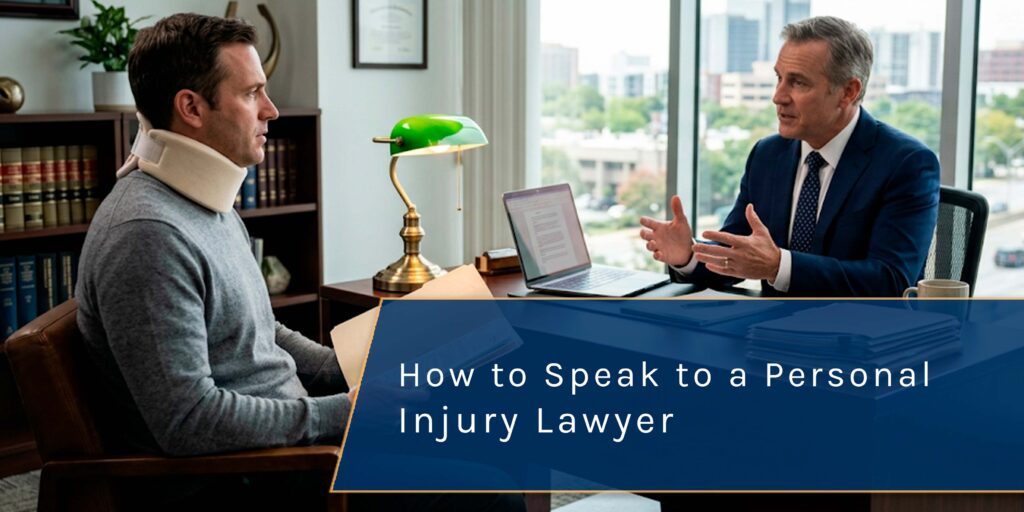
When you meet with a Florida personal injury lawyer, you want to be helpful, accurate, and reasonable. You may try to remember every detail and explain what happened as clearly as possible. However, certain phrases can quietly hurt your claim, weaken your leverage, and give the insurance company an advantage. Even small statements or guesses can affect how your case is evaluated later.
What you say early on can shape the direction of your claim, the strength of your evidence, and your ability to recover full compensation. A Florida personal injury attorney can help guide those conversations, but understanding what to avoid from the start can make a real difference.
Table of Contents
Why Your Florida Personal Injury Lawyer Needs Facts, Not Guesses
A personal injury lawyer focuses on three key goals: proving liability, documenting your damages, and negotiating from a position of strength with the insurance company. Insurance carriers do not pay because you seem honest. They pay when the evidence supports the numbers and when a lawyer builds leverage. Therefore, your Florida personal injury attorney needs clear facts that match the paper trail to push for full compensation.
Here is how most car accident claims get evaluated:
- Medical records and billing statements
- Crash report and citations
- Photos and videos from the scene
- Vehicle damage estimates
- Witness statements and 911 calls
- Prior claim history and prior accidents
- In serious cases, accident reconstruction and expert opinions
For that reason, your words matter. They often become the first “record” of what happened. Later, adjusters compare those words to your medical notes, your deposition, and the crash report. Provide clear, accurate facts to your Florida personal injury lawyer from the start so your case stays consistent and strong.
Phrases To Avoid With Your Florida Personal Injury Lawyer
You should be open with your Florida personal injury lawyer. Still, certain phrases can create confusion, gaps, or inconsistencies that weaken your case later. Focus on clear, accurate facts instead.
- “It was my fault.”
Fault is a legal conclusion. Early admissions can limit how your lawyer builds your case. - “I’m fine.”
Symptoms can appear later. This can conflict with your medical records. - “It’s not that bad.”
Minimizing injuries can reduce how your claim is evaluated. - “I didn’t see them.”
This can sound like inattention and affect fault analysis. - “I didn’t go to the doctor.”
Delays in care can weaken the link between the crash and your injuries. - “I missed some appointments, but it’s no big deal.”
Gaps in treatment can raise doubts about your injuries. - “I don’t want to mention my old injury.”
Prior injuries often come up later and can affect credibility. - “I think I was going about 30.”
Guessing details can conflict with reports or evidence. - “I just want to get this over with quickly.”
Rushing the process can lead to a lower settlement. - “I posted about it, but it’s private.”
Social media can still affect your case.
Your Florida personal injury lawyer is there to help you and protect your claim. Clear, honest, and accurate communication gives them the strongest foundation to build your case. It also prepares you for what to avoid with the insurance adjusters too.
What You Should Share Instead: The Details That Help Your Case
A Florida personal injury attorney can protect you better when you share the full picture early. Attorney-client privilege generally protects what you tell your lawyer, which is why it’s vital to communicate openly and honestly. So, be direct.
Use this checklist and keep it simple:
- Exact date, time, and location of the crash
- Direction of travel, lane position, and traffic flow
- Weather, lighting, and road conditions
- What you saw and heard before impact
- Photos and videos from the scene, including vehicle positions
- Names and numbers of witnesses
- The crash report number and responding agency
- All medical visits, even if you think they are minor
- Symptoms by day, including headaches, dizziness, and numbness
- Missed work, reduced hours, and job duties you could not do
- Receipts for prescriptions, rides, and medical devices
- Prior accidents, prior claims, and pre-existing conditions
- Any insurance calls, emails, texts, and settlement offers
Also, tell your Florida personal injury lawyer about anything that worries you. That includes a ticket, a lapse in insurance, or a bad social media post. Problems do not improve in silence.
How To Handle Insurance Calls After a Florida Car Accident
Insurance adjusters sound friendly. Still, their job is to limit payouts. Therefore, take a simple approach: be polite, stay brief, and do not debate liability.
If you already have a Florida personal injury lawyer, you can use safe phrases like:
- “I’m seeking medical care.”
- “I will follow up after I speak with my lawyer.”
- “My Florida personal injury lawyer will respond.”
Just as important, avoid these traps with adjusters:
- Guessing speed or distance
- Admitting fault or apologizing
- Minimizing pain or saying you are fine
- Debating who had the right of way
- Giving detailed comments on pre-existing conditions
- Agreeing to a recorded statement without legal advice
After any call, write a short note. List the date, time, and the adjuster’s name. Then send that note to your Florida personal injury lawyer. Also, keep emails, claim letters, and voicemails.
Comparative Negligence in Florida: Why Your Words About Fault Matter
Florida uses a modified comparative negligence system. This means your compensation decreases by your percentage of fault under this Florida law. If you are found more than 50% at fault, you cannot recover damages at all, so even small statements can significantly reduce or eliminate your recovery.
Insurers look for ways to shift blame. They often use common car accident scenarios, such as:
- Following too closely in stop and go traffic
- Unsafe lane changes near merges
- Assumptions about speeding without proof
- Distracted driving claims, including phone use
- “Failure to keep a proper lookout” arguments
This is where wording matters. For example, “I didn’t see them” can become “I wasn’t paying attention.” Likewise, “I was in a hurry” can become “I was driving aggressively.”
A Florida personal injury lawyer will not hide facts. Instead, your lawyer will present them accurately and in context. That approach reduces insurer spin and protects case value.
A Quick Timeline for Building a Strong Florida Car Accident Case
Good cases are built. They are not guessed into existence. Use this timeline to help your Florida personal injury lawyer move faster.
First 24 To 72 Hours
- Get a medical evaluation, even for mild symptoms
- Start a symptom journal with dates and short entries
- Take photos of injuries and bruising as they develop
- Photograph vehicles, plates, and the roadway
- Avoid posting on social media, even vague updates
First Week
- Request the crash report when available
- Gather medical visit summaries and discharge papers
- Get repair estimates and towing receipts
- Send witness names and numbers to your lawyer
- Forward every insurance email, text, or letter
Ongoing
- Follow treatment plans and restrictions
- Track missed work, missed opportunities, and reduced tasks
- Keep receipts for out of pocket expenses
- Note daily limits, like driving, lifting, and sleep disruption
Before Settlement Talks
- Review total medical charges and projected future care
- Confirm wage loss documentation and employment records
- Discuss pain, suffering, and lifestyle impacts clearly
- Build a demand package strategy with your Florida personal injury lawyer
Clear communication and timely updates help your lawyer protect your claim at every stage. A Florida personal injury lawyer can use that information to build leverage, address insurer tactics, and keep your case moving forward.
How Your Personal Injury Lawyer Helps You Get the Florida Accident Settlement You Deserve
A Florida personal injury lawyer plays a critical role in protecting your claim and helping you pursue full compensation from the start.
Your lawyer can:
- Manage communication with the insurance company
- Identify gaps or inconsistencies before they become problems
- Gather and organize medical records and evidence
- Calculate the full value of your damages
- Negotiate from a position of strength
Staying consistent with your treatment, records, and reporting keeps your case strong and limits opportunities for the insurance company to challenge your claim.
FAQs (Frequently Asked Questions)
Why is it important to mention prior injuries to my Florida personal injury lawyer?
Insurance companies share claims data and will likely discover prior injuries. If they find out first, they may attack your credibility. Being upfront about prior issues and explaining how this crash changed things strengthens your case.
Should I give a recorded statement to the insurance company after a Florida accident?
You are not required to give a recorded statement to the other driver’s insurance company. These statements can be used against you, so it is best to speak with a Florida personal injury lawyer before agreeing.
How can social media posts affect my Florida car accident claim?
Social media content, even if set to private, can be accessed and used against you by insurance companies to undermine your claim. It’s advisable to acknowledge any posts related to the accident and refrain from posting further until advised by your lawyer.
What phrases should I avoid when communicating with my Florida personal injury lawyer to protect my car accident claim?
Avoid phrases like ‘It Was My Fault,’ ‘I’m Sorry,’ ‘I’m Fine,’ ‘It’s Not That Bad,’ or guessing details such as speed or intoxication without proof. These can weaken your claim or give insurers leverage. Instead, provide clear, factual descriptions of events and symptoms to support your case effectively.
How does a Florida personal injury lawyer help maximize my accident settlement?
A Florida personal injury lawyer builds your claim with strong evidence, clear documentation, and a strategy focused on full compensation. They also handle negotiations and insurer tactics so you can avoid mistakes and protect your recovery.
Start Your Case the Right Way With a Florida Personal Injury Lawyer
You do not need perfect words, but what you say still matters. Early conversations can shape your case, your strategy, and how your claim moves forward. A Florida personal injury lawyer can guide you on what to share, what to avoid, and how to protect your position from the start.
If you were hurt in a Florida accident, whether it is a car, truck, boat or other type of accident, contact us at Personal Injury Attorneys McQuaid & Douglas today for a free consultation. Our award-winning attorneys will give you clear guidance to help avoid common mistakes, and move forward with confidence.