
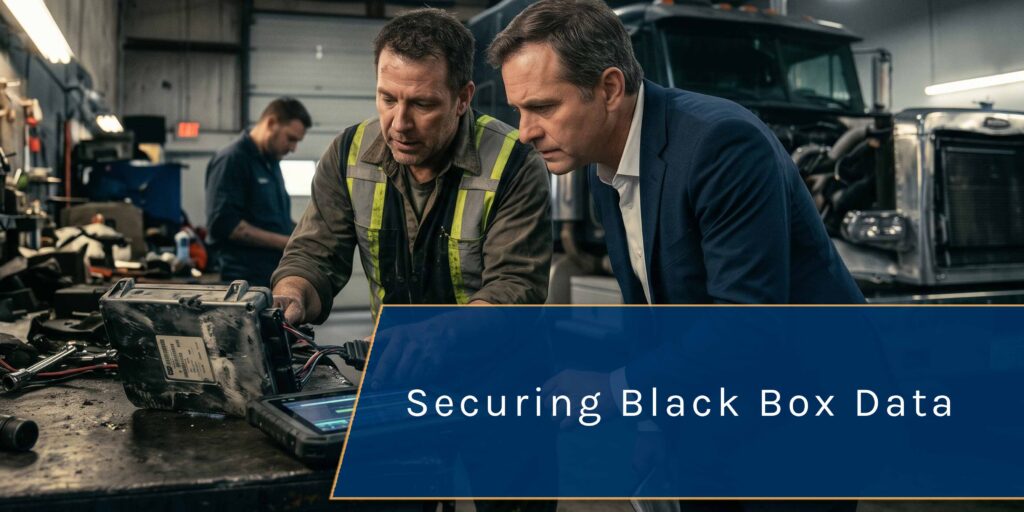
After a serious truck accident, a Florida truck accident lawyer can help secure black box data that provides critical evidence about what happened in the moments leading up to the crash. This information may reveal the truck’s speed, braking activity, and other details that help establish fault. However, trucking companies may repair vehicles, return trucks to service, or overwrite electronic data during routine operations.
This is why hiring an experienced truck accident attorney as soon as possible is so important. Your lawyer can take immediate steps to secure and preserve black box data before it disappears. They can also obtain other valuable evidence, including electronic logging device (ELD) records, dashcam footage, maintenance records, and witness statements.
Understanding how Florida truck accident lawyers obtain and use black box evidence, along with other critical records, can help you recognize why acting quickly is essential to protecting your rights and building a strong personal injury claim.
Table of Contents
Why Black Box Data and Other Truck Accident Evidence Matter
A car crash claim usually involves two drivers and a police report. A truck crash is different. It often involves the driver, the carrier, a broker, a shipper, maintenance vendors, and multiple insurers. At the same time, it involves far more data.
Unfortunately, that evidence disappears faster than most people expect. Video footage can be overwritten within days. ELD and GPS data can overwrite. The truck can get repaired and returned to service. Internal communications can get deleted under normal retention policies.
Trucking insurers and commercial carriers move quickly after a crash. They may immediately begin building a defense by sending investigators to the scene and contacting witnesses. That is why hiring a Florida truck accident lawyer as soon as possible is so important. Black box data can provide critical evidence, but it rarely tells the whole story. Your attorney can combine this information with driver logs, GPS records, maintenance histories, and witness statements to build a stronger case.
How a Lawyer Uses Spoliation Letters to Preserve Evidence
A spoliation letter formally instructs recipients to preserve crash-related evidence, including electronic records and damaged equipment. A Florida truck accident lawyer may send these notices to:
- The driver and trucking company
- Brokers, logistics companies, and insurers
- ELD and telematics providers
- Tow companies, repair facilities, and salvage yards
- Businesses with relevant security footage
The notice may demand that no one repairs, alters, or destroys the truck before an inspection. It can also require recipients to retain original files, backup copies, and internal communications instead of following routine deletion policies.
These demands help prevent evidence destruction. Once a party has a legal duty to preserve evidence, violating that duty may have legal consequences. A lawyer may also arrange for both sides to inspect the vehicles.
How A Lawyer Obtains Black Box Data
People call it the “black box,” but trucks often store data in multiple systems. Depending on the vehicle, that can include the ECM and an event data recorder. These systems record what the truck did before impact.
Black box data can show facts that drivers and insurers may dispute later, such as:
- Speed
- Brake application and brake timing
- Throttle position
- Engine RPM
- Cruise control use
- Hard braking events
- Timing leading up to the collision
A Florida truck accident lawyer handles retrieval with care because electronic evidence needs proper documentation. While each case differs, the high-level process usually looks like this:
- Identify which modules store relevant data
- Send preservation demands before any download attempt
- Coordinate a controlled download with qualified personnel
- Document chain of custody from start to finish
Lawyers often involve forensic safeguards. They may use forensic imaging, secure storage, and written download reports. When handled correctly, black box data can change the entire direction of the case. It can also expose unsafe driving within seconds of impact.
Telematics, ELD, And GPS: The Electronic Trail That Shows What Really Happened
Modern fleets use telematics and fleet management systems. These tools track the truck, the driver, and the route. In many cases, they also track driving behavior, location history, and stop times.
ELD data matters for another reason. The electronic logging device records a driver’s hours of service. Federal rules limit how long a driver can operate without rest. Therefore, the ELD can show whether the driver drove too long and too tired.
A Florida truck accident lawyer often tests ELD entries against other records. This comparison can reveal fatigue or falsified logs. For example, your lawyer may compare logs with:
- Dispatch records and delivery windows
- Fuel receipts and timestamps
- Toll records
- Scale tickets and weigh station data
Lawyers also look for tampering red flags. These can include suspicious log edits, GPS gaps, sudden location jumps, or missing segments of data. When the “electronic trail” does not match reality, that mismatch can support liability and, in some cases, punitive exposure.
Driver Records That Often Prove Negligence
Driver files often hold the story the carrier does not want to highlight. For that reason, a Florida truck accident lawyer requests key driver documents early and tracks what the carrier produces.
Common requests include:
- Driving history and prior violations
- License information and endorsements
- Training records and safety certifications
- Medical exam results and qualification files
Safety-related records can matter just as much. Your lawyer may seek:
- Drug and alcohol test results
- Employment history and prior terminations
- Performance reviews and disciplinary actions
- Cell phone records when distraction is suspected
Phone and receipt data can become surprisingly powerful. Timestamps can confirm stops and routing. They can also undercut a driver’s version of events. If a driver claims they never touched a phone, usage records can prove otherwise.
Trucking Company Records: Maintenance, Inspections, And Safety History
Some truck crashes result from mechanical failures, while others become more severe because of equipment problems. Either way, maintenance history matters.
A Florida truck accident lawyer looks for signs of neglected repairs, missed inspections, or cost-cutting decisions. Those issues can support direct negligence and negligent maintenance claims.
Key documents often include:
- Maintenance logs and service histories
- Repair invoices and mechanic notes
- Pre-trip and post-trip inspection reports
- Annual inspection records
- Violation history tied to the unit and carrier
Carrier-level factors also matter. A lawyer may review the company’s safety rating, prior crash history, roadside inspection results, and internal safety policies. Patterns count. If a carrier tolerates violations, that culture can show up in your case.
Preserving Physical Evidence at the Scene and on the Vehicles
Physical evidence can disappear as crews clear the road and vehicles undergo repairs. A Florida truck accident lawyer may arrange early documentation of skid marks, debris, roadway damage, lighting, traffic controls, weather, and visibility.
Inspecting both vehicles can reveal collision angles, damage patterns, possible underride, and brake or tire problems. Investigators typically document:
- Wide views of the scene
- Vehicle positions and nearby landmarks
- Close-ups of damage and roadway marks
- Measurements and reference points
Take photos only if it is safe. Your Florida truck accident lawyer can coordinate a more thorough inspection and preserve the findings for your claim.
Video And Witness Evidence: What A Lawyer Tries To Secure First
Video often tells the truth in one clip. Yet many systems overwrite quickly. That includes traffic cameras, business security systems, and some dashcams. Some footage disappears within days.
Because timing is tight, a Florida truck accident lawyer sends immediate requests to likely video holders. Lawyers also ask the carrier to preserve any inward-facing or outward-facing truck camera footage.
Witness evidence also goes stale fast. People forget details. They also become harder to find.
Attorneys and investigators locate witnesses early, interview them, and record statements while memories stay fresh. Witnesses may describe lane drifting, speeding, unsafe passing, or erratic braking. They may also confirm lighting, weather, and road conditions. Those details can support your version of events when the defense attacks credibility later.
Accident Reconstruction Experts And How They Use The Preserved Evidence
Accident reconstruction is not guesswork. A reconstructionist uses physics, vehicle dynamics, timing, and measurable data to explain what happened.
That work depends on preserved evidence. For instance, experts often rely on:
- Black box and telematics data
- Scene measurements and photographs
- Vehicle inspections and crush analysis
- Roadway conditions and visibility factors
In some cases, mechanical specialists support the reconstruction. They may inspect brakes, tires, lights, steering components, and other systems. If a defect or maintenance failure played a role, expert analysis can connect that failure to the crash.
A Florida truck accident lawyer coordinates these experts and builds the evidence foundation they need. Without early preservation, even the best expert cannot recreate what got erased.
FAQs (Frequently Asked Questions)
Why are the first 48 hours critical after a Florida truck crash?
Evidence can disappear quickly after a truck accident. Vehicles may be repaired, electronic data overwritten, and video footage deleted. A Florida truck accident lawyer can act immediately to preserve critical evidence before it is lost.
What types of evidence commonly disappear after a truck accident?
Dashcam footage, GPS data, electronic logs, and internal communications may be deleted under routine retention policies. Trucks may also be repaired before important evidence is documented. Early legal action helps prevent these losses.
What is a spoliation letter in a Florida truck accident case?
A spoliation letter is a formal notice demanding the preservation of relevant evidence. Lawyers send these notices to trucking companies and other parties to help prevent the destruction or alteration of records, electronic data, and equipment.
Why is black box data important in truck accident investigations?
Black box data can reveal vehicle speed, braking, throttle use, and other details surrounding a collision. Attorneys work with qualified experts to retrieve and preserve this information, which can help establish fault.
How do ELD, GPS, and driver records help prove negligence?
ELD and GPS records can reveal driving hours, routes, stops, and potential violations of federal rest regulations. Driver qualification records may expose inadequate training, prior safety violations, or licensing issues that contributed to the crash.
Protect Critical Evidence With an Experienced Florida Truck Accident Lawyer
Evidence can disappear quickly after a commercial truck accident, and waiting to seek legal help could weaken your claim. An experienced Florida truck accident lawyer can act promptly to preserve black box data, driver logs, maintenance records, surveillance footage, and other critical evidence before it is lost.
At Personal Injury Attorneys McQuaid & Douglas, our award-winning legal team has recovered over $200 million for accident victims, including multimillion-dollar settlements in commercial trucking cases. We understand the complexities of truck accident claims and know how to investigate trucking companies, challenge insurance companies, and fight for the compensation you deserve.
If you or a loved one has been injured in a Florida truck accident, contact us for a free consultation. Let our experienced attorneys protect your rights, preserve critical evidence, and fight for your financial recovery.